Mold Removal in Lafayette, LA
You moved the bookcase and the wall behind it is speckled gray-green. Or the ceiling in the hallway has a brown ring that has grown a little every month since the spring storms. Or the bottom of the bedroom closet smells like a wet box and the baseboard gives when you press it. Call and tell us what you found — we remove mold in Lafayette and across Acadiana, and that is all we do.
Where the job starts
We look at the material, the room, and where the water came from. Moisture readings on the drywall and the framing behind it mark the real edge of the job — which sheets come out, which studs get cleaned, and how far past the stain the wet area runs. The stain is what you can see. The readings tell us the rest.
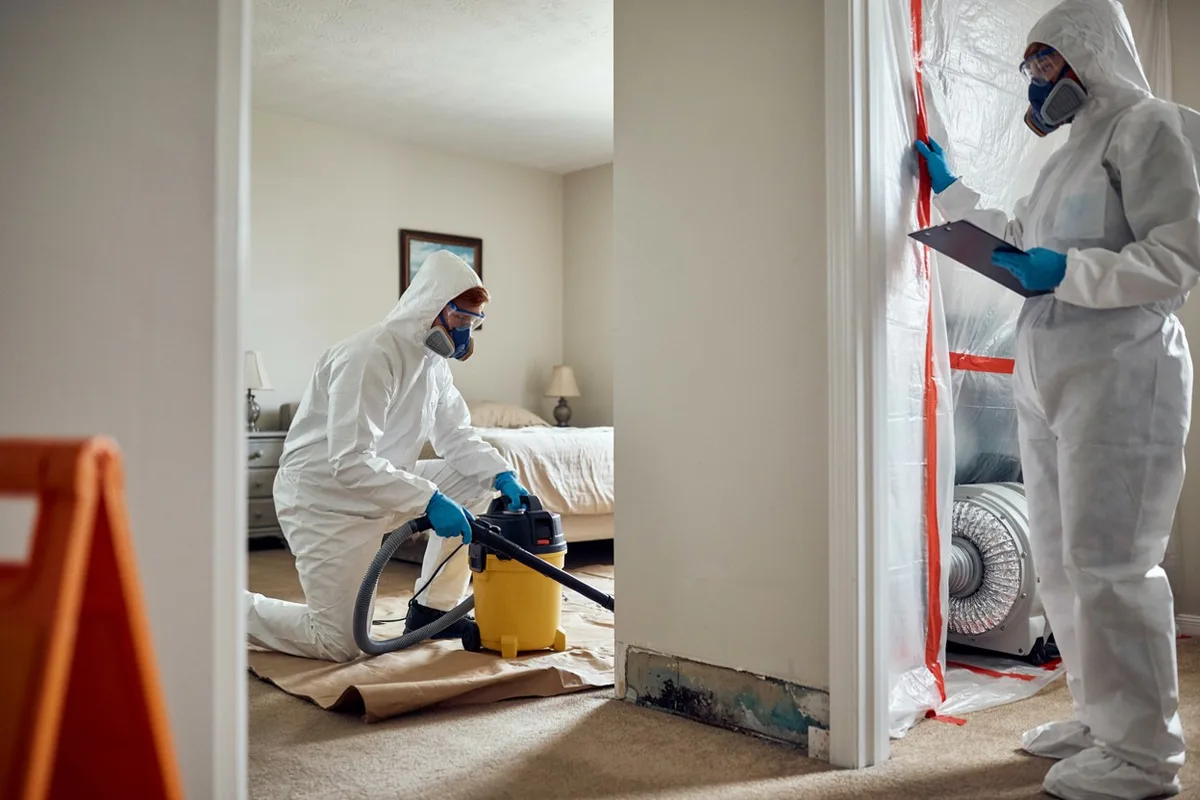
Before anything gets cut, the work area is sealed in plastic and put under negative pressure so nothing drifts into the rest of the house. We work in respirators and suits.
What comes out, and what stays
- Drywall, insulation, carpet pad, ceiling tile, and any other porous material that has been wet and moldy comes out, bagged inside the containment.
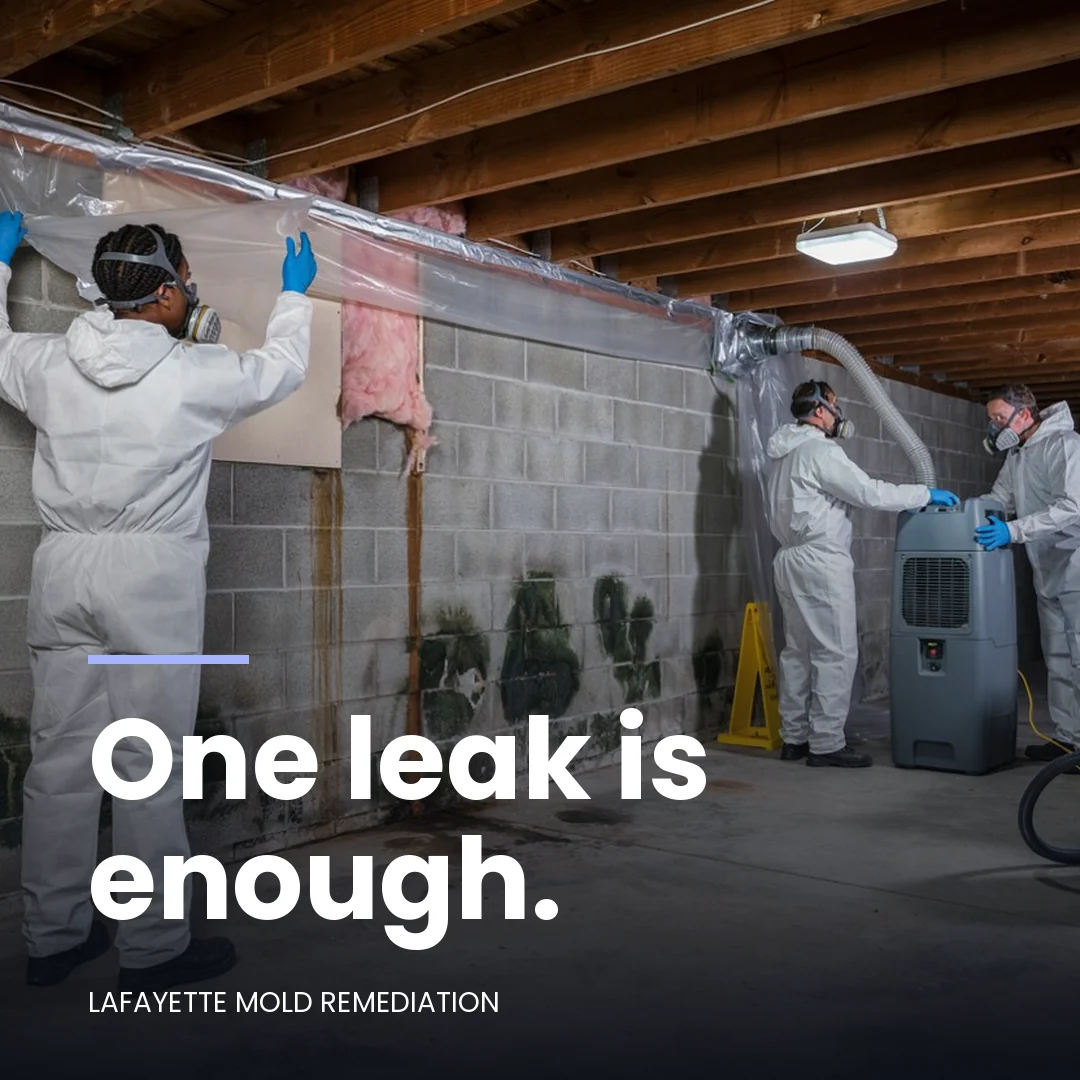
- Studs, plates, slab, and masonry stay, get cleaned in place, and are HEPA-vacuumed and wiped down.
- Nothing closes back up until the wood reads dry — LSU AgCenter puts that below 20 percent moisture.
- Dried-out growth is still an allergen, so the standard is removal, not killing.
Tell Us What Got Wet, 24/7
The water has to stop first
Mold needs moisture, and if the leak that fed it is still running the removal won’t hold. Part of every job is finding where the water got in and telling you what has to change before the wall closes. EPA doesn’t recommend bleach as a routine practice and says not to paint or caulk over mold. A fresh coat changes the color, not the cause.
Lafayette notes
More than 60 inches of rain a year, and most of it in downpours. A slab ranch off Johnston Street with its original bathroom plumbing, a raised cottage in Sterling Grove with a hundred-year-old roofline, a five-year-old house in Youngsville built tight enough that a small leak has nowhere to dry — one leak is enough in any of them. And the leak doesn’t have to be recent. The one that dried on its own in the spring can be the reason there is mold on the wall in September.
What you have when we leave
A written report of what we removed, from where, and why. Louisiana law requires remediators to provide one, and it is what a buyer, a tenant, or an adjuster will ask for later.