Attic Mold Remediation in Lafayette, LA
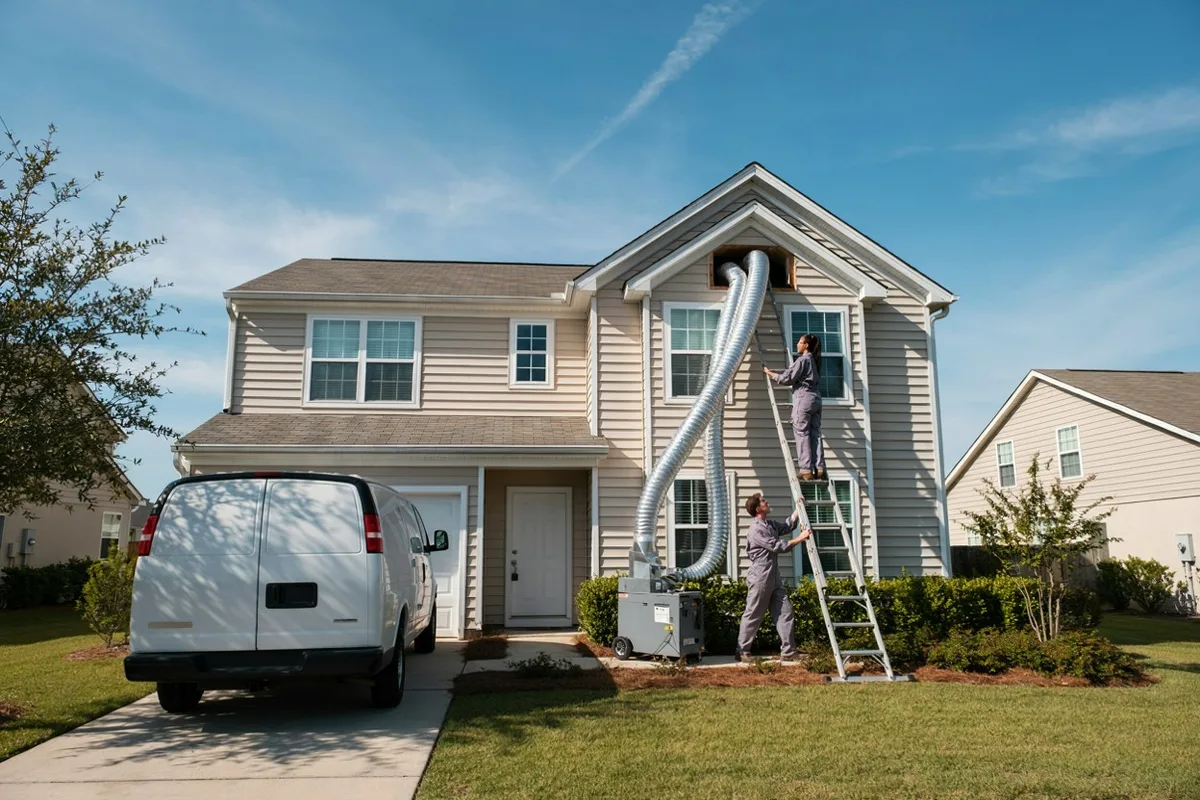
The AC tech came down the pull-down stairs and said the plywood over the air handler is black. Or the roofer replacing shingles after the last storm mentioned the decking along the back eave. Or you went up for the Mardi Gras boxes with a flashlight and the rafters didn’t look like they did last year. Call and tell us what you saw up there — we handle attic mold in Lafayette and across Acadiana.
Why attics here grow it
Three ways, usually. A roof leak — often small, around a vent boot, a valley, or the flashing at a chimney — dripping onto the decking through a season of afternoon downpours. A bathroom or dryer vent that ends in the attic instead of outside, blowing warm wet air onto decking that cools every night. Or the air handler itself: most Acadiana homes keep the unit on a platform in the attic, and one that sweats, or a drain line that backs up, keeps the platform and the insulation under it wet for months. After the rain, look at what stayed damp.
What the work looks like
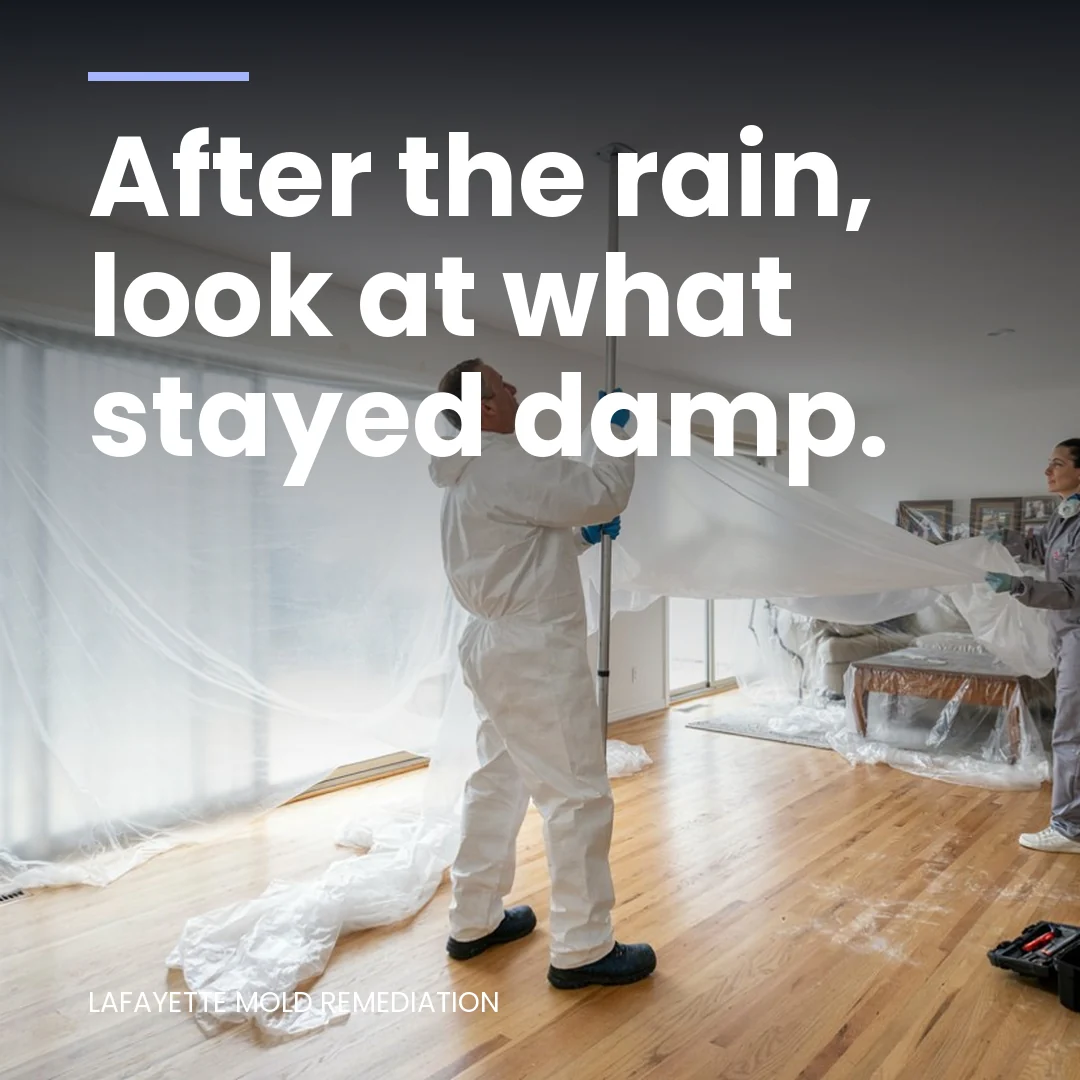
- The attic hatch gets sealed and the attic goes under negative pressure so the work doesn’t push dust down into the rooms below.
- Roof decking and rafters stay; the growth on them is HEPA-vacuumed and cleaned, sometimes wire-brushed or lightly sanded.
- Wet, matted insulation under the affected area comes out, bagged.
- A roof leak can dry on the surface while the decking and insulation inside the assembly stay wet — we tell you where the moisture is coming from so the job lasts.
Found Mold After A Leak? We Answer 24/7
Newer home, same rules
The subdivisions south of Lafayette toward Youngsville and Broussard are full of houses under fifteen years old, and attic mold calls come from them as often as from the old cottages in town. A tight, well-insulated attic holds moisture from a bath fan or a sweating unit just as well as a leaky one, and the roof on a 2012 house has been through more than a decade of Acadiana storms. Age isn’t the variable. Moisture is.
What to do before we get there
Stay out of the attic without a respirator — walking on the insulation is what puts spores into the house. If a ceiling below the affected area is stained and soft, keep people out of that room. Note when the roof and the air handler were last serviced and what was found. Tell us when the water problem started.