Mold Odor Removal in Lafayette, LA
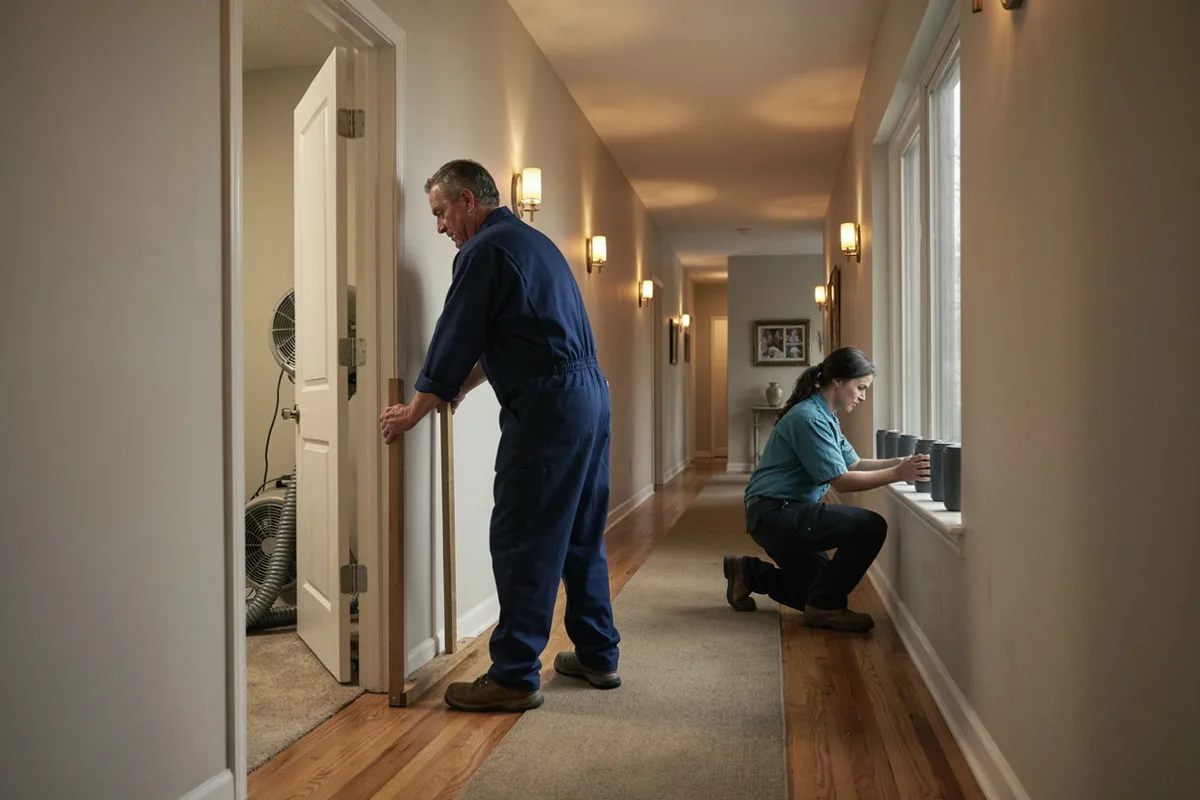
The smell got there before anything you could point to. A back bedroom that never airs out. The hall closet by the bathroom. The whole house for the first ten minutes after the air conditioning kicks on, then it fades and you stop noticing. Nothing looks wet, and you’ve already tried the plug-ins. Call and tell us where you smell it — we track down and remove the growth behind a musty smell in Lafayette and across Acadiana.
What you’re smelling
Mold gives off gases as it grows, and that earthy, wet-cardboard smell is a recognized sign of hidden growth — health departments list it right alongside staining and past water damage. If the smell is strongest in one room, the source is close to that room: behind a wall, under a floor, above a ceiling, or in the duct that feeds it. If the smell is everywhere and tied to the air conditioning, the source is likely in the system. EPA says mold doesn’t have to be visible to be present, and lists the back of drywall, under carpet, and around pipes inside walls as the usual hiding places.
Why the smell comes first
- A musty smell can show up well before any visible growth does.
- A pipe sweating or seeping inside a wall often announces itself as a smell in the room, not a stain.
- Growth that started while a material was wet keeps giving off odor after the surface feels dry.
- If the smell keeps returning after you air the room out, pay attention — something is still feeding it.
Tell Us Where You Smell It, 24/7
Why sprays and candles don’t last
Odor sprays, plug-ins, and the gadgets sold online either mask the smell or dull your nose to it. The growth keeps going underneath. The only odor removal that holds is finding the moldy material, taking it out, cleaning the cavity it came from, and stopping the water that fed it. Covering it doesn’t remove it — that goes for the smell as much as the stain.
How we find it
We start in the room where the smell is strongest, take moisture readings on the likely surfaces — the wall behind the bathroom, the floor by the exterior door, the ceiling under the air handler — and open only what the readings justify. In a raised house in Freetown or the Saint Streets that often means crawl space mold remediation. In a slab house in Youngsville or Broussard with the smell tied to the air conditioning, it usually becomes HVAC and duct mold remediation. Either way you find out what has been making the smell, and it leaves with us.